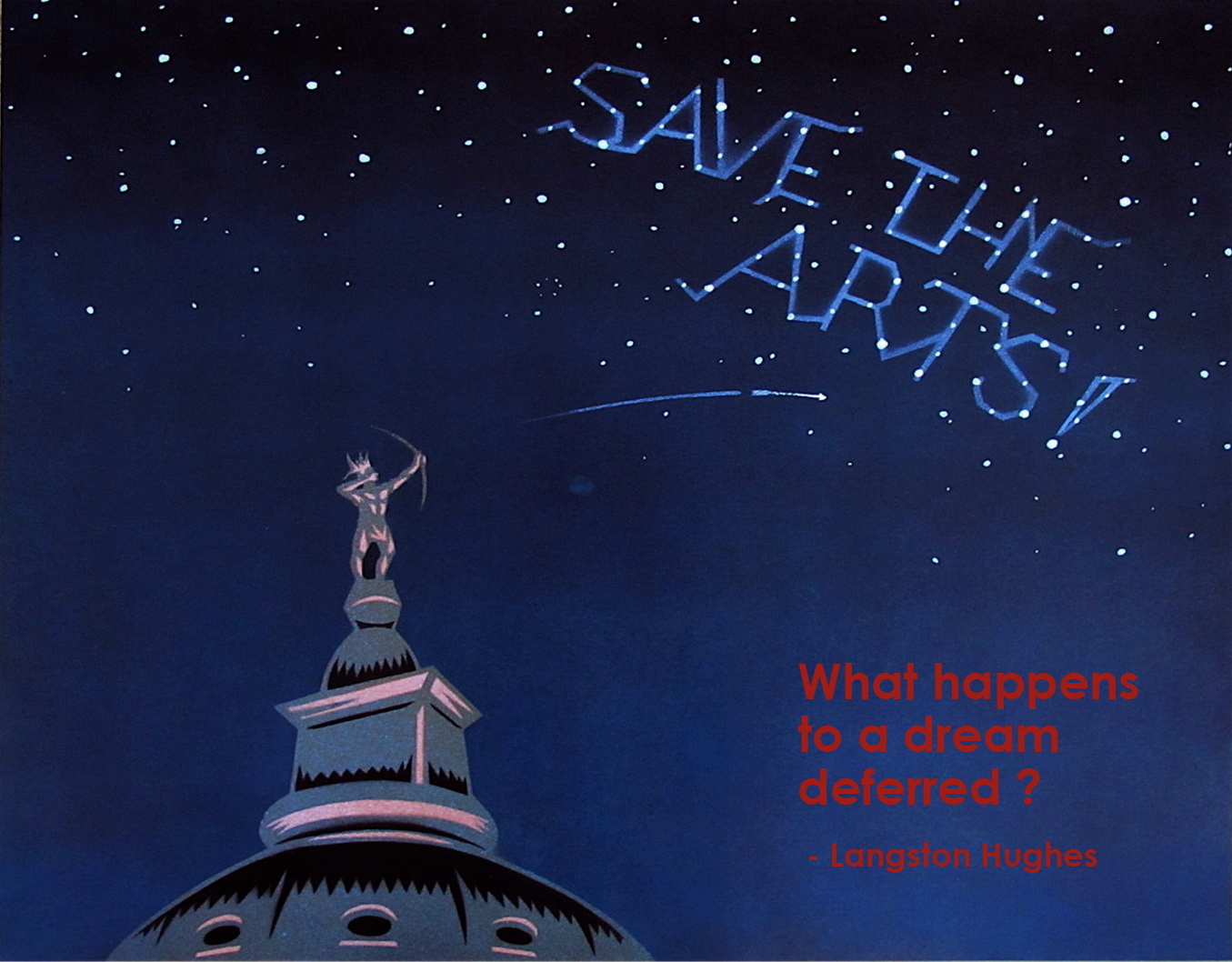
This is unacceptable.
Please, if you care about the Arts, contact your state senator and the governor to express your support for the Kansas Arts Commission.


On December 11, 1921, propelled by the need to feed their children and outraged at Kansas’s new anti-labor legislation, a crowd of more than 500 women gathered in Franklin, Kansas and resolved to march in solidarity with miners striking at union District 14 coal mines. The strike was called in response to the new Industrial Court Law signed by Kansas Governor Allen, which forced unions into arbitration and outlawed strikes. On December 12th, the women began their march on the mines, armed only with the American flag, which they carried to make clear that the values it symbolized were synonymous to those of their cause.
By December 15th, the march had swelled to more than 4,000 stretching over a mile long. With the mines at a stand still, word spread that the militia was en route, and the women, dubbed the “Amazon Army” by the New York Times, voluntarily chose to end their march in the hopes of preventing bloodshed. Victory for the marchers and their striking coal miners came the following year when the U.S. Supreme Court ruled that the compulsory arbitration clause of the Industrial Court Law was unconstitutional. Workers still had the right to strike.
Offered for the first time at Washburn University
Instructor - Dave Loewenstein
Community-Based Public Art: Roots and Practice* January 2011
*listed as Murals and Public Art in Washburn course catalog
Beginning with a series of lectures, visiting speakers, and field trips, this unique new course will introduce art students to the roots and current practice of collaborative community-based public art: projects that bring local people together in partnership with professional artists, to engage in an open process that culminates in the creation of site specific artworks reflecting their interests and their workmanship. Following the classroom work, students will move to the studio where each will develop their own design for a community mural at a specific site in the Topeka area. This process will include site visits, meetings with stakeholders, and consideration of logistics in the execution of the work. The completed designs will be shown at the end of the semester in an exhibition open to the public.
“The highest, most logical, purest and most powerful type of painting is mural painting. It is also the most disinterested, as it cannot be converted into an object of personal gain nor can it be concealed for the benefit of a few privileged people. It is for the people. It is for everybody.”
- Jose Clemente Orozco, Mexican Muralist